Support: christophe@horoview.com
Seiko logoUpdated October 6, 2026

Identify a Seiko From a Photo: Model and Caseback Code Guide

Seiko has produced an enormous range of models over many decades, which is why so many people ask what Seiko they are holding. The good news is that Seiko casebacks are unusually informative. Every modern Seiko carries a calibre-case code such as 7S26-0020 and a serial number whose first two digits hint at the year and month of production. The catch is that the model code you see in shops, such as SKX007 or SRPD55, is not engraved on the watch at all.

This page explains how those two systems fit together, how to read the serial without over-claiming the decade, how to tell a Japanese domestic (JDM) model from an export one, and how to recognise the Seiko 5 shield, the Prospex X and other collection marks. Upload a photo and WatchID returns model and reference candidates you can check against the caseback.

Identification is not authentication. Seiko watches are also widely modified, so a match tells you what the watch is based on, not that every part is original.
Loading the identifier…

Photos are used only to identify the watch and are deleted right after the scan. Identification is not an authentication or a valuation. Privacy Policy

Where to find the model and caseback codes

Turn a Seiko over and you will find two things engraved on the caseback: a calibre-case code in the form 7S26-0020, and a serial number, usually six digits. You will also see the water resistance rating, the case material and often the country of manufacture. What you will not find is the model code. SKX007, SRPD55 and SPB143 are catalogue numbers that appear on the hang tag, the box label and the warranty card, not on the watch.

That is why one caseback code can cover several watches. The code describes the movement and case; the model code adds the dial, bezel and bracelet, so SKX007, SKX009 and SKX011 all read 7S26-0020 on the back.

Vintage Seikos follow the same system, with codes such as 6139-6002 on 1970s chronographs or 6309-7040 on the original Turtle divers. Many also carry a small factory symbol on the dial or caseback. For the cross-brand picture, see our guide to watch reference numbers.

How to read a Seiko caseback code

The code before the hyphen is the calibre, the code after it is the case. In 7S26-0020, 7S26 is a 21-jewel automatic that neither hacks nor hand-winds, and 0020 is the SKX case. Knowing the calibre family tells you a lot about the watch's position in the range.

Caseback codeCalibreModel codes that use it
7S26-00207S26 automaticSKX007, SKX009, SKX011
7S26-02J07S26 automaticSNK809 and the SNK80x field series
4R36-04Y04R36 automatic, hacking and hand-windingSRP777 and later Turtle variants
6R35-00P06R35 automatic, around 70 hours of reserveSPB143 and its dial variants
6R15-00G06R15 automaticSBDC001 Sumo
9R65-0AE09R65 Spring DriveSBGA211 (Grand Seiko)

As a rule of thumb: 7S is the basic automatic, 4R adds hacking and hand-winding, 6R is the mid-range automatic with a longer power reserve, 8L is the high-grade automatic used in top Prospex divers, 9R is Spring Drive, 9S and 9F are Grand Seiko mechanical and quartz, V-series calibres are solar, 7T are quartz chronographs and 7N are basic quartz.

Serial numbers and dating

The serial on a Seiko caseback is usually six digits, and the first two tell you when the watch was made. The first digit is the last digit of the year and the second is the month, with 1 to 9 for January to September and the letters O, N and D for October, November and December. A serial beginning 8N was therefore made in November of a year ending in 8.

The system does not tell you the decade. A 7S26-0020 with a serial starting 8 could be from 1998, 2008 or 2018, because the SKX was produced across all three. Narrow it down with the calibre's production run, the dial text and the packaging. A 4R36 cannot be older than the early 2010s; a 6R35 cannot be older than 2019.

One further cue helps. A J at the end of the model code (SKX007J1) means the watch was assembled in Japan and the dial usually reads Made in Japan; a K means it was assembled elsewhere, often Malaysia.

Visual cues by collection

  • Seiko 5 and 5 Sports: the shield-shaped 5 logo on the dial, a day-date window at 3 and, on classic models, a crown at 4 o'clock and a display caseback. The 2019 5 Sports range borrowed the SKX case shape.
  • Prospex: the X logo (the Prospex mark) on the dial since the mid-2010s, together with Diver's 200m or similar text. Divers, field watches and solar chronographs all sit here.
  • Presage: dress watches with the Presage name on the dial and often a decorative dial finish, from pressed patterns to enamel and porcelain.
  • Astron: GPS solar watches, usually large, with Astron on the dial.
  • King Seiko and Grand Seiko: King Seiko returned in the 2020s with its own crest. Grand Seiko has been a separate brand since 2017, and dials made since then read only Grand Seiko, so a dial that also says Seiko is from before 2017.
  • Vintage: Lord Matic, Bell-Matic, the 6139 and 6138 chronographs and the 6105 and 6309 divers, often with a Suwa whirl or Daini lightning-bolt symbol on the dial.

Common confusions and look-alikes

  • SKX007 or 5 Sports SRPD: the cases are nearly identical. The SKX has no 5 shield, a screw-down crown, a 7S26 and Diver's 200m on the dial; the SRPD has the shield, a push-pull crown, a 4R36 and a 100 m rating.
  • Seiko, Grand Seiko or King Seiko: separate lines with their own logos; Grand Seiko uses SBGA, SBGR and SBGX prefixes.
  • Modded Seikos: the SKX, 5 Sports and Turtle are among the most commonly modified watches anywhere, with aftermarket dials, hands, bezels and crystals. The caseback code will still be genuine; the dial may not be.
  • Franken vintage: old Seikos are often assembled from parts of several watches. Check that the dial code printed at 6 o'clock matches the caseback calibre.
  • Dive-watch homages: the SKX and Turtle borrow cues from Swiss divers and are borrowed from in turn. See our Rolex and Omega guides for the originals.

Outright counterfeits exist, mostly of the SKX and of Grand Seiko, but misrepresented mods are the bigger risk. Our guide to spotting a fake luxury watch covers the general method.

Identifying a Seiko from a photo

Seiko is a brand where photo identification is especially useful, because the model code is not on the watch and the range is vast. WatchID matches the case shape, bezel, dial layout, hand set and logo against known Seiko models and returns candidates with their catalogue codes, so you can go from a wrist shot to SRPD55 or SPB143 without decoding anything.

  1. Photograph the dial straight on, making sure the text lines at 6 o'clock are legible.
  2. Photograph the caseback; the calibre-case code confirms or rules out the candidates.
  3. If the watch is modified, expect the base model rather than the exact mod.
  4. Match the caseback code to the candidate. A 7S26-0020 cannot be an SRPD, however similar it looks.

Limits: a photo cannot tell a J from a K version unless the dial text is readable, cannot confirm the movement, and can be fooled by well-made aftermarket dials. For the method in detail, read how to identify a watch from a photo; our guide to quartz versus automatic movements covers Seiko's two movement families.

Popular Seiko references

Popular Seiko models with a reference example and how to recognise each
ModelReference exampleHow to recognise it
Seiko SKX007 Diver's 200mSKX007 (caseback 7S26-0020)Classic 200 m diver with the crown at 4, a day-date at 3 and the 7S26 automatic; discontinued around 2019 and succeeded by the 5 Sports.
Seiko 5 Sports SRPD55SRPD55SKX-shaped case with the 5 shield on the dial, a 4R36 automatic, a push-pull crown and a 100 m rating; black dial on a steel bracelet.
Prospex SPB143 (62MAS reinterpretation)SPB143Modern reinterpretation of the 1965 62MAS diver, 40.5 mm, with a 6R35 automatic and a date at 3; no day display.
Prospex Turtle SRPE93SRPE93Cushion-shaped case with the crown at 4, a 4R36 automatic and a 200 m rating; the updated black version of the SRP777.
Seiko 5 SNK809SNK809Small field-style Seiko 5 with a 7S26, day-date at 3, crown at 4 and a display caseback; the SNK80x siblings differ only in dial colour.
Prospex Speedtimer Solar Chronograph SSC813SSC813Solar quartz chronograph in the Speedtimer style with three sub-dials and a tachymeter bezel, launched in 2021.
Prospex Sumo SBDC001SBDC001Japanese-market diver with a large rounded case, a 6R15 automatic and a 200 m rating; the Sumo nickname comes from its stance.
Seiko 5 SNKL23SNKL23Dress-leaning Seiko 5 with a 7S26, Arabic numerals and a day-date; the black dial version of the SNKL family.
Grand Seiko Snowflake SBGA211SBGA211Spring Drive 9R65 with a textured white dial, power reserve indicator and a gliding seconds hand; Grand Seiko is a separate brand, so expect only Grand Seiko on the dial.

Seiko identification FAQ

Where is the model number on a Seiko watch?

It is not on the watch. Seiko engraves a calibre-case code such as 7S26-0020 and a serial number on the caseback, while the model code (SKX007, SRPD55) appears only on the hang tag, box and warranty card. To recover the model code from the watch itself, match the caseback code and the dial design, which is what WatchID does from a photo.

How do I find out what year my Seiko was made?

Read the first two characters of the caseback serial. The first digit is the last digit of the year and the second is the month, with O, N and D standing for October, November and December. The decade is not encoded, so combine the result with the calibre's production run and the design to settle on a year.

What does 7S26-0020 mean on a Seiko?

It is the calibre and case code. 7S26 is the 21-jewel automatic movement used in the SKX and many Seiko 5 models; 0020 is the case used by the SKX007, SKX009 and SKX011. The dial, bezel and bracelet are what separate those model codes, so the caseback alone does not tell you which colour you have.

What is the difference between a Seiko 5 and a Prospex?

Seiko 5 is the everyday automatic line, marked by the shield-shaped 5 logo and in recent years by the 5 Sports name. Prospex is the professional sports line, marked by the X logo and carrying proper dive ratings and higher-grade calibres. The 2019 5 Sports looks like the SKX diver but is rated to 100 m rather than 200 m.

What do J and K mean at the end of a Seiko model code?

J means the watch was assembled in Japan and the dial usually reads Made in Japan; K means it was assembled outside Japan, often in Malaysia. The movement and case are the same, and the dial text and caseback wording are the visible differences. JDM models sold only in Japan use different codes, such as SBDC for Prospex.

Can WatchID tell if my Seiko has been modified?

Not directly. The tool identifies the model a watch is based on, and a well-made mod will usually be matched to its donor case. If the suggested model has a different dial, hands or bezel from what you see, treat that as a sign of modification and check the dial code at 6 o'clock against the caseback calibre.

Related guides

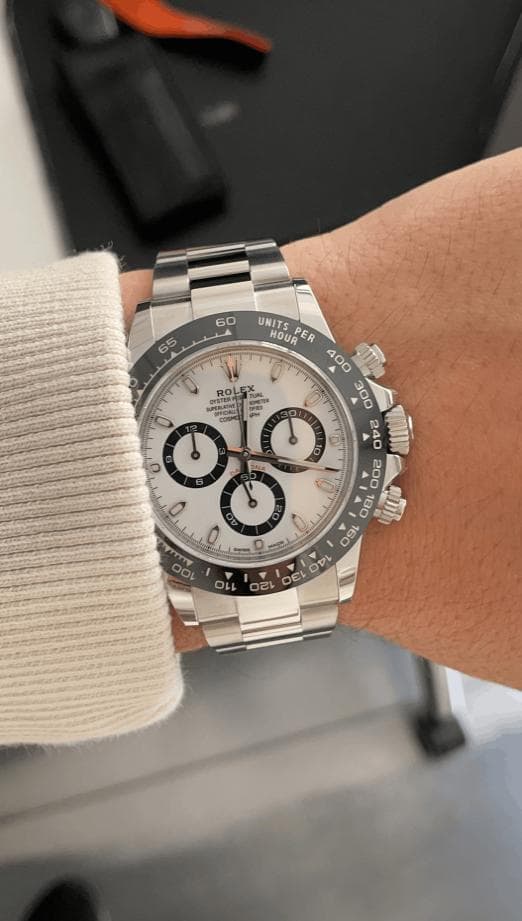
Wrist shot of a steel Rolex Daytona chronograph with a white dial and black ceramic bezel
Identification7 min read

How to Identify a Watch: A Step-by-Step Checklist

A practical checklist for identifying any watch: dial, case, caseback engravings, bracelet codes, movement and papers, plus photo-based identification.

Updated

Close-up of a wristwatch dial and case
Education7 min read

Watch Reference Numbers Explained, Brand by Brand

How watch reference numbers work at Rolex, Patek Philippe, Audemars Piguet, Omega, Cartier, Breitling, Tudor and Seiko, where to find them and how to search.

Updated