Support: christophe@horoview.com
Panerai logo
·Managing Director, Horoview

Identify a Panerai From a Photo: PAM Number and Case Guide

Panerai is one of the most recognisable watch designs there is and one of the most confusing to identify precisely. The cushion case, the crown-protecting bridge and the oversized luminous numerals have barely changed since the brand began selling watches to the public in 1993, so a Luminor from the late 1990s and one from this year look alike at arm's length. Underneath, the catalogue runs to well over a thousand PAM numbers that differ in size, movement, dial construction, material and production series, and the number collectors use to name a watch is usually not engraved on it.

This page explains where Panerai does engrave its identifiers, how the PAM number relates to the OP reference, the serial and the series letter on the case, how far those marks can be trusted for dating, and which cues separate Luminor, Luminor 1950, Luminor Due, Radiomir, Radiomir 1940 and Submersible. It also covers the look-alikes, from the brand's own near-identical references to homages and replicas.

Upload a photo and WatchID returns reference candidates you can check against the engravings on the case. Treat that as identification, not authentication: a match tells you what the watch appears to be, and only the engravings, the papers and a physical inspection can tell you whether it is genuine.
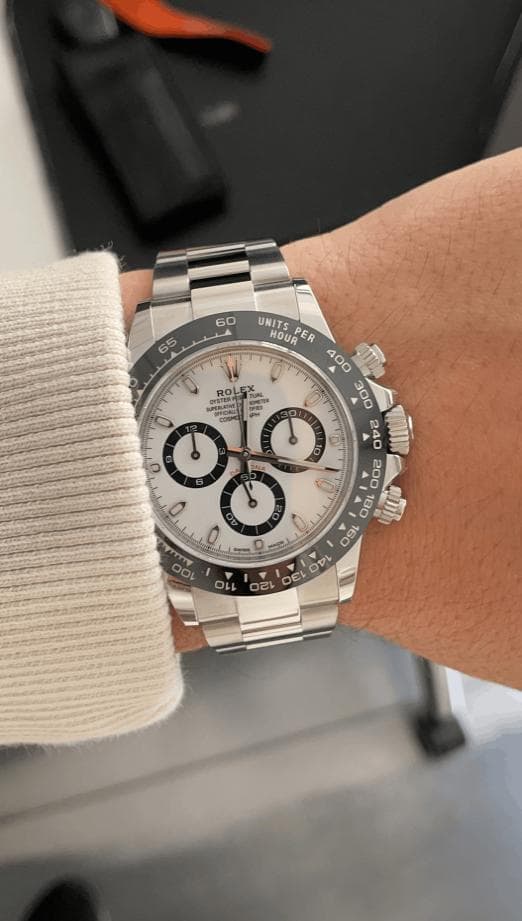
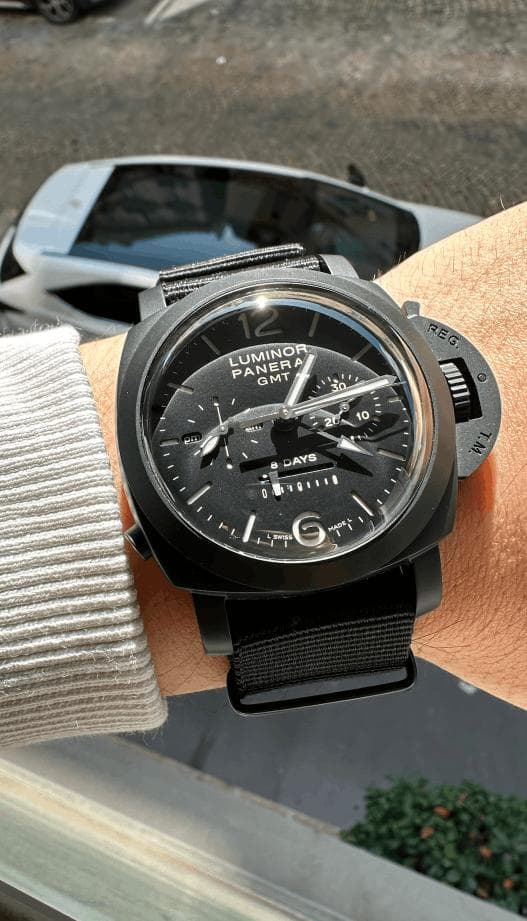
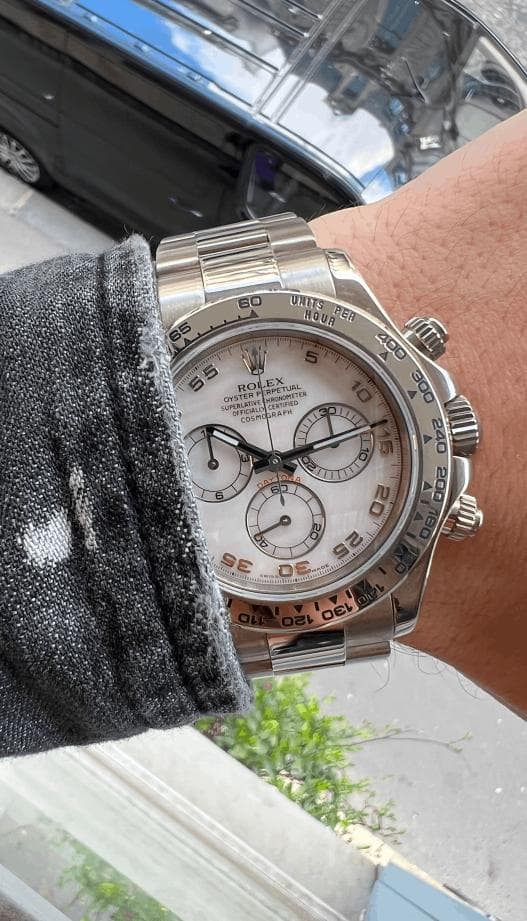
Loading the identifier…

Photos are used only to identify the watch and are deleted right after the scan. Identification is not an authentication or a valuation. Privacy Policy

Where to find the PAM number, OP reference and serial

Modern Panerai watches carry three identifiers plus a production mark, and it helps to know which one you are looking at.

  • The PAM number (PAM00111, PAM01312) is the catalogue reference used by Panerai, dealers and collectors. On most watches it is not engraved anywhere; it appears on the warranty card and the box. A few recent references do carry it on the case, but its absence is normal.
  • The OP reference is the letters OP followed by four digits, such as OP 6567. It is engraved on the watch and identifies the case and model execution rather than the catalogue number. The same PAM has often been produced under more than one OP number as movements or dials changed.
  • The serial number is unique to the watch. On Richemont-era pieces it usually reads BB followed by seven digits, and it is the number on the warranty card.
  • The series letter and production number, in the form N 0123/1500: a letter for the production series, this watch's sequence number within it and the planned size of that run for the reference. This is the mark collectors use for dating.

Where these are engraved depends on the case. On Luminor models with a solid steel caseback, everything sits on the caseback alongside the Officine Panerai text and the Firenze 1860 line. On display-back Luminors with the flat 1990s case, the engravings move to the steel ring around the sapphire. On Luminor 1950, Radiomir, Radiomir 1940 and most recent models, look instead at the flat flank of the case at 9 o'clock, opposite the crown. Pre-Vendôme watches from 1993 to 1997 predate the PAM system and use references in a 5218-2xx/A form.

For how other brands structure the same information, see our guide to watch reference numbers.

How PAM numbers work

PAM is usually read as Panerai Modello, Panerai model. Each number is a catalogue reference for one exact execution: case, size, material, movement, dial and strap. Panerai writes it with five digits, PAM00111 or PAM01312; collectors drop the leading zeros and say PAM 111. The numbers were assigned roughly in the order references were created, starting in the late 1990s and passing PAM01000 in the 2010s, so a higher number is broadly a newer reference.

What a PAM number does not do is encode anything. Unlike a Rolex or Omega reference, there is no digit for the collection, the size or the material. PAM00111 and PAM00112 are both 44 mm hand-wound Luminors that differ by a small seconds hand; PAM00510 is a 47 mm Radiomir 1940. A change of dial colour, movement or strap is a new PAM, which is why two watches that look identical can carry different numbers.

ReferenceModelWhat distinguishes it
PAM00111Luminor Marina 44 mmHand-wound, small seconds at 9 o'clock, flat Luminor case
PAM00112Luminor Base 44 mmHand-wound, time only, sandwich dial
PAM00005Luminor Base Logo 44 mmHand-wound, painted dial with the OP logo at 6 o'clock, solid caseback
PAM00372Luminor 1950 3 Days 47 mmHand-wound in-house P.3000, no seconds hand, cushion 1950 case
PAM00312Luminor Marina 1950 3 Days Automatic 44 mmIn-house P.9000 automatic, date at 3, small seconds at 9
PAM01312Luminor Marina 44 mmSuccessor to PAM00312 with the P.9010 movement, launched in 2016
PAM00510Radiomir 1940 3 Days 47 mmHand-wound P.3000 in the 1940 case with integrated lugs
PAM00424Radiomir California 3 Days 47 mmHand-wound P.3000, wire lugs, Roman and Arabic California dial

Model names add a second layer: 3 Days or 8 Days states the power reserve, and Acciaio, Titanio, Oro Rosso, Ceramica and Bronzo are Italian for steel, titanium, red gold, ceramic and bronze.

Serial numbers, series letters and dating

Panerai does not publish production dates by serial, and the BB serial carries no date code an owner can read. What collectors use instead is the series letter engraved before the production number. The first Richemont-era collection, released in 1998, was the A series; each subsequent production series took the next letter of the alphabet. A watch engraved P 0456/1000 belongs to the P series, the 456th of a planned 1,000 for that reference, and P sits in the early-to-mid 2010s; T is in the late 2010s. Watches from the first Vendôme year, 1997, carry no letter and are known as pre-A.

Use this with care. The letter marks when the series was produced, not when the watch was sold. Published letter-to-year lists are collector reconstructions rather than Panerai documents, so decade-level confidence is reasonable and a precise year from the letter alone is not. The warranty card date, where you have it, is the better guide.

The number after the slash is also widely misread. It is the planned size of that series for that reference, not a limited-edition count: a regular-production Luminor can read 0456/1500 without being limited, and genuine limited editions use the same format. None of these engravings proves authenticity either: all of them are copied onto replicas, and only Panerai can check a serial against its records.

Visual cues by collection

A clear dial-side photo places almost any Panerai in a collection. Size is hard to judge from a picture, so look at the case shape and the crown first.

  • Luminor: the crown-protecting bridge with its lever is the defining feature, patented by Panerai in the mid-1950s. The plain Luminor case of PAM00111, PAM00112 and PAM00005 has a flat bezel, straight lugs and a comparatively flat profile. Luminor Base is time-only; Luminor Marina adds small seconds at 9 o'clock.
  • Luminor 1950: the same bridge on a case closer to the 1950s original: a rounder cushion shape, a thicker and slightly domed bezel and, on most references, a display caseback. Made chiefly in 44 and 47 mm, the 47 mm being the historic size. PAM00312, PAM00372 and PAM01312 are all 1950 cases.
  • Luminor Due: introduced in 2016, a noticeably slimmer 1950 case with a lower water-resistance rating and dressier dials. It keeps the bridge, so the thinness is the tell. Sizes run from 38 to 45 mm.
  • Radiomir: cushion case with no crown guard, a conical or onion crown and thin wire-loop lugs, the design of the 1930s and 1940s Navy watches. The lugs on modern examples are removable.
  • Radiomir 1940: the cushion case again, but with lugs machined from the same block as the case and a cylindrical crown: the 1950 shape without the bridge.
  • Submersible: a unidirectional rotating bezel with dot markers, round dial indices, small seconds at 9 o'clock, a date at 3 on most references and a 300 m or deeper rating. Sold as Luminor Submersible until 2019 and as a stand-alone Submersible collection since, in 42, 44 and 47 mm.

Dial construction is the next cue. A sandwich dial is two plates: the numerals and indices are cut out of the upper plate and the luminous paste on the lower plate shows through, so the markers look recessed. A sausage dial paints thick, raised luminous numerals onto a single plate. A Logo dial has flat printed markers and the OP logo at 6 o'clock. A California dial mixes Roman numerals in the upper half with Arabic numerals in the lower half and batons at 3 and 9, a 1930s layout revived in several Radiomir references.

Common confusions and look-alikes

  • Luminor, Luminor 1950 or Luminor Due: all three have the bridge. The plain Luminor has a flat bezel and flat case sides; the 1950 is rounder, thicker and more domed; the Due is a 1950 shape slimmed down. Dial text does not help, because 1950 never appears on the dial.
  • Radiomir or Radiomir 1940: wire lugs and a conical crown mean Radiomir; integrated lugs and a cylindrical crown mean Radiomir 1940. The 1940 case can also be mistaken for a Luminor 1950 whose bridge is hidden by the camera angle, so look for the lever.
  • Submersible or Luminor Submersible: the same family under two names. Dials and casebacks before 2019 read Luminor Submersible; later ones read only Submersible.
  • Near-identical references: Panerai's own catalogue is the biggest source of error. PAM00312 and PAM01312 differ in movement and little else visible, and dozens of references share a case and differ only in dial colour, lume colour or strap. The engraved OP number and series mark settle it.
  • Special editions and boutique pieces: Panerai releases many limited editions, boutique-only references and regional pieces, each with its own PAM number. A photo tool will usually match such a piece to its regular-production sibling, so an unexpected detail is a prompt to look up the edition.
  • Homages and replicas: the Luminor shape has been copied more than almost any other design, from open homages to counterfeits that reproduce the dial text and the engravings. Weak points on copies include the depth and evenness of a sandwich dial, the action of the bridge lever, the alignment of the engravings and the movement visible through a display back. Our guide to spotting a fake luxury watch covers the general method.

Vintage Panerai is a field of its own. The 1930s and 1940s Radiomir references were made with Rolex cases and movements, and 1950s Luminors used Angelus calibres; surviving examples are rare, heavily studied and widely faked, and no photo tool should be relied on for them. If you are weighing a Panerai against Rolex or Omega divers, our Rolex and Omega pages describe the equivalent cues.

Identifying a Panerai from a photo

Photo identification works well for a Panerai's collection and family; the engravings are needed for the exact reference. WatchID matches the case shape, crown, bezel, dial construction, numerals and text layout against known Panerai references and returns ranked candidates with their PAM numbers, which you then test against the OP number and series mark on the case.

  1. Photograph the dial straight on with the crown side in frame, so that the bridge or its absence, the crown shape and the lug type are visible.
  2. Photograph the caseback or the 9 o'clock flank with the engravings legible. The OP number and series letter confirm or reject a candidate.
  3. Expect close siblings in the results, such as PAM00312 alongside PAM01312, and use the series letter to separate them: the later reference cannot carry an early letter.

Limits: a photo cannot tell 44 from 47 mm reliably without a reference object, cannot see the movement unless the caseback is shown, and cannot distinguish a good replica from the original. For the general method read how to identify a watch and how to identify a watch from a photo, or go straight to the identification tool. To compare candidates against real examples and prices, browse the Panerai listings on Horoview.

Popular Panerai references

Popular Panerai models with a reference example and how to recognise each
ModelReference exampleHow to recognise it
Luminor Marina 44 mm (hand-wound)PAM00111Flat 44 mm Luminor case, hand-wound movement with small seconds at 9 o'clock and a display caseback; one of the longest-running and most common Panerai references of the 2000s and 2010s.
Luminor Marina Automatic 44 mmPAM01312Luminor 1950 case with the in-house P.9010 automatic, date at 3, small seconds at 9 and a sandwich dial; replaced PAM00312 in 2016 and remains a core reference.
Luminor 1950 3 Days 47 mmPAM0037247 mm cushion 1950 case, hand-wound P.3000 with a three-day reserve, sandwich dial with no seconds hand and a display caseback; the modern reference closest to the 1950s original.
Luminor Base Logo 44 mmPAM00005Time-only hand-wound Luminor with a painted dial, the OP logo at 6 o'clock and a solid caseback; for many years the least expensive regular-production Panerai.
Luminor Submersible 44 mmPAM00024Steel automatic diver with a unidirectional dot-marked bezel, date at 3, small seconds at 9 and a 300 m rating; a long-running reference from the early Richemont years.
Luminor Submersible 1950 3 Days Automatic Bronzo 47 mmPAM00382The first bronze Panerai, 47 mm with a green dial and the P.9000 automatic, limited to 1,000 pieces in 2011; patina makes examples look different from one another in photos.

Panerai identification FAQ

What does PAM mean on a Panerai?

PAM is read as Panerai Modello, Panerai model, and the number that follows is the catalogue reference for one exact execution of a watch: PAM00111 is the hand-wound 44 mm Luminor Marina, PAM01312 the automatic version in the 1950 case. The numbers run roughly in order of creation and do not encode collection, size or material. Collectors drop the leading zeros and say PAM 111.

Where is the serial number on a Panerai?

On the caseback of Luminor models with a solid back, on the steel ring around the sapphire on display-back Luminors with the flat case, and on the flat flank of the case at 9 o'clock on Luminor 1950, Radiomir and most recent models. Richemont-era serials usually read BB followed by seven digits and sit alongside the OP reference and the series letter. The PAM number itself is usually not engraved; it is on the warranty card.

What is the difference between Luminor and Radiomir?

The Luminor has the crown-protecting bridge with its lever on the right-hand side of the case; the Radiomir has no crown guard, a conical or onion crown and thin wire-loop lugs. Radiomir is the older design, dating from the 1930s Navy watches, and Luminor took over in the 1950s. Radiomir 1940 is a Radiomir with solid integrated lugs, and Luminor 1950 is a Luminor on a rounder, thicker case.

How do I find out what year my Panerai was made?

Read the series letter engraved before the production number on the caseback or case flank. A marks the first Richemont-era series of 1998 and each later series took the next letter, so a letter from the middle of the alphabet points to the 2010s. The lists that map letters to years are collector reconstructions, so treat the result as approximate and prefer the warranty card date when you have it. Pre-Vendôme watches from 1993 to 1997 use a different reference system.

Can you tell if a Panerai is real from a photo?

No. A photo lets WatchID identify the reference a watch appears to be, which tells you what to check, but replicas copy the dial text, the engravings and even the series mark. Confirm that the OP number, serial and series letter are consistent with the suggested reference, inspect the sandwich dial, bridge lever and movement in person, and have the serial checked by Panerai or an authorised dealer before buying.

Related guides

Wrist shot of a steel Rolex Daytona chronograph with a white dial and black ceramic bezel
Identification7 min read

How to Identify a Watch: A Step-by-Step Checklist

A practical checklist for identifying any watch: dial, case, caseback engravings, bracelet codes, movement and papers, plus photo-based identification.

Updated

Close-up of a wristwatch dial and case
Education7 min read

Watch Reference Numbers Explained, Brand by Brand

How watch reference numbers work at Rolex, Patek Philippe, Audemars Piguet, Omega, Cartier, Breitling, Tudor and Seiko, where to find them and how to search.

Updated