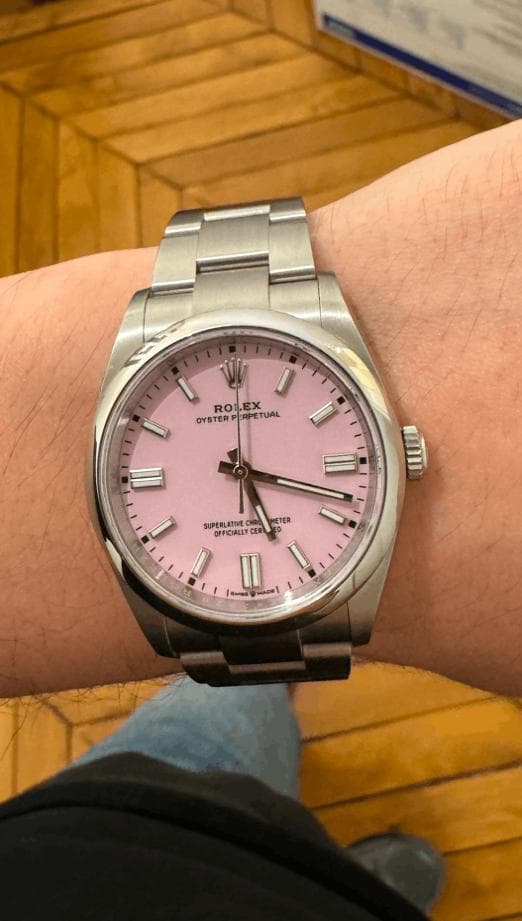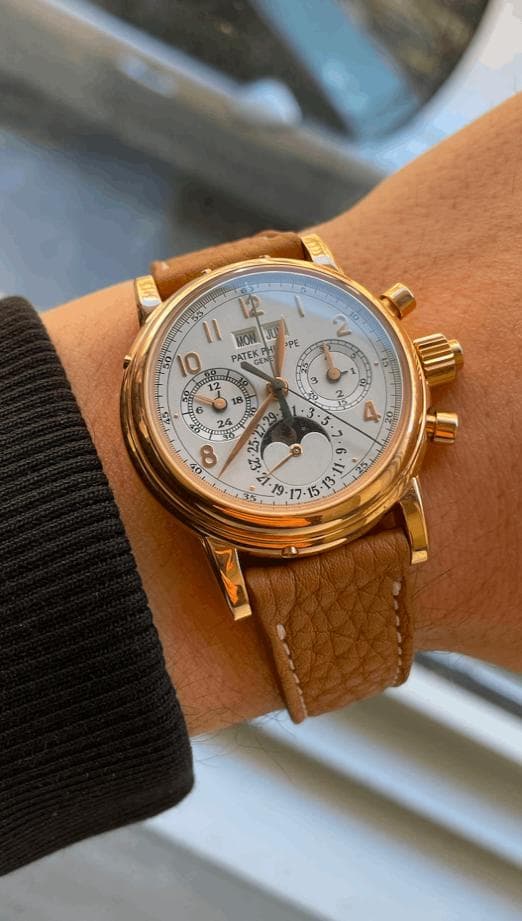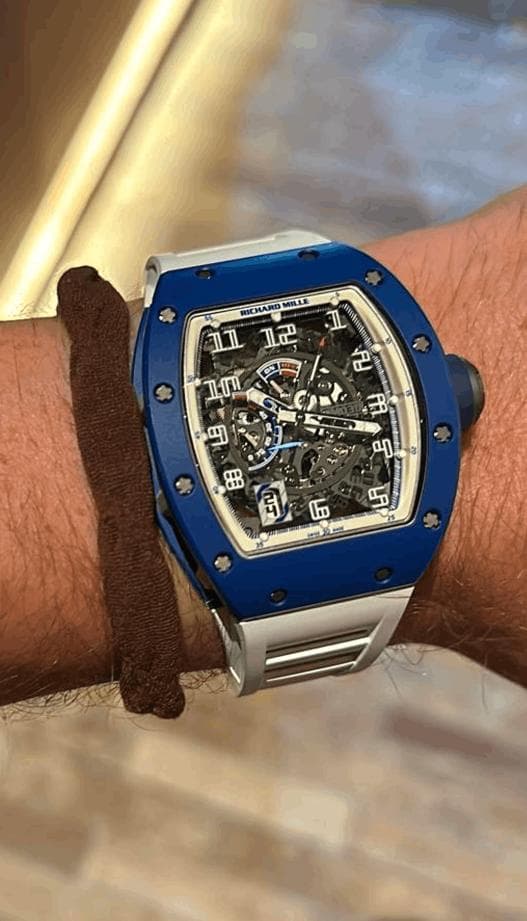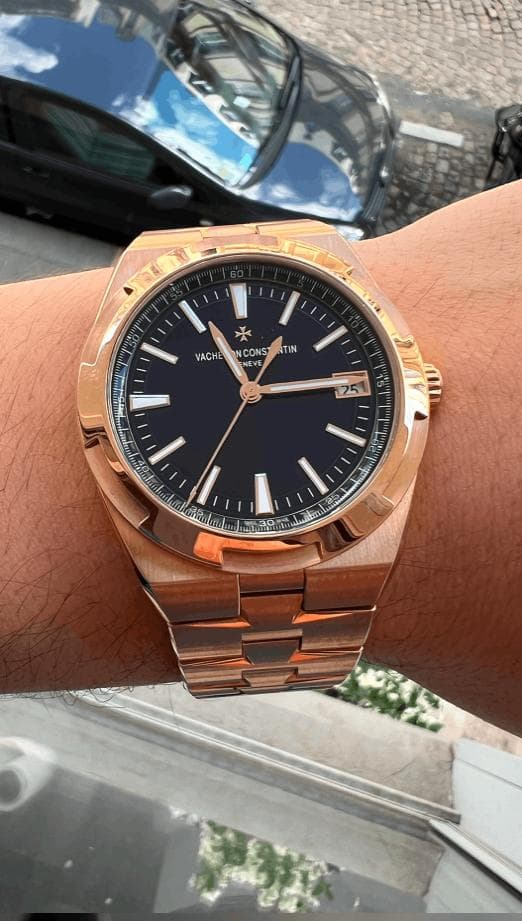
A clear photo is often all you have when a watch catches your eye in a listing, a film or someone's wrist shot. Modern image recognition can turn that photo into a brand, a model and a shortlist of references in seconds, but the quality of the answer depends on the quality of the picture and on knowing what the result does and does not mean. This guide covers both.
Take a photo the tool can read
Whether you use a reverse image search or a dedicated identifier, the software is reading the same visual features a collector would. Give it the best possible view.
Lighting
Use soft, indirect daylight or a diffused lamp. Direct sunlight and bare bulbs create hard reflections on the crystal that hide the dial text and the hands. Avoid the phone's flash, which bounces straight back off the crystal. If the room is dark, move closer to a window rather than raising the exposure, which adds noise and washes out dial colour.
Angle and framing
Shoot straight down onto the dial, as close to perpendicular as you can, so the case appears round rather than elliptical and the bezel markings are not foreshortened. Fill most of the frame with the watch and keep the whole case and bezel inside it; cropping off the bezel removes a key identifier. Tap to focus on the dial text. A plain background, such as a table or a sleeve, stops the software from latching onto something else in the picture.
Reflections
Tilt the watch a few degrees until the reflection of your phone or the lamp moves off the dial. Anti-reflective coatings vary widely, so this can take a couple of attempts. If part of the dial stays hidden, take two photos at slightly different angles so that every area is readable in at least one of them.
What an AI identifier reads
An image model does not read a watch the way a search engine reads a web page. It compares patterns in the image against patterns it has learned from many labelled examples. The features that carry the most weight are:
- Dial layout: the position of the date window, the number and arrangement of sub-dials, the style of hour markers and the amount of text.
- Hands: Mercedes, snowflake, sword, dauphine, syringe or baton shapes narrow the brand quickly.
- Bezel: whether it rotates, its scale (60-minute, 24-hour, tachymeter), its colour split and its material.
- Case geometry: round, octagonal, cushion or rectangular; the shape of the lugs; the presence of crown guards; whether the bracelet is integrated.
- Text: brand and model names, depth ratings, chronometer lines and the layout of the text at 6 o'clock.
- Bracelet style: three-link, five-link, integrated, mesh or strap.
This is why a photo taken from the side of the wrist, or one where the bezel is cropped, produces weaker results. The model is working with fewer of the features it relies on. For a deeper look at those features, see how to identify a watch.
Reverse image search vs a dedicated identifier
General reverse image tools and dedicated watch identifiers solve different problems, and it helps to know which one you are using.
| Approach | What it returns | Strength | Weakness |
|---|---|---|---|
| General reverse image search | Visually similar images and the pages they appear on | Free, fast, broad coverage of anything on the public web | Rarely names a reference; results favour popular images and can mix brands with similar designs |
| Dedicated watch identifier | Brand, model and reference candidates, often with listings | Trained on watches specifically; distinguishes variants a generic tool misses | Limited by its database; may struggle with obscure or heavily modified watches |
| Forum or community post | Human opinions, sometimes very expert | Handles vintage, rare and odd cases well | Slow; quality depends on who answers |
A practical workflow is to start with a dedicated identifier for a shortlist, use a reverse image search to find more photos of the candidate references, and ask a forum only when the result stays ambiguous. The comparison of identification apps looks at how to evaluate these tools.
Reading the result
A good identifier returns layers of information, and each layer has a different level of certainty.
- Brand is usually the most reliable element. Logos and design language are distinctive.
- Model or family, such as Speedmaster or Datejust, is typically reliable when the dial is clear.
- Reference candidates are a shortlist. A photo of a steel Submariner Date with a black ceramic bezel could match 116610LN or 126610LN, which differ by a millimetre in diameter and by small changes to the lugs and bracelet.
- Confidence, when shown, tells you how far the top candidate stands out from the rest. Treat a close spread between candidates as an invitation to check more details, not as an error.
WatchID, the identifier built by Horoview, presents results in this way: brand, model and reference candidates, each linked to live marketplace listings so you can compare the candidate references side by side in the app or on the web identifier. Whatever tool you use, open the candidate references and compare dial text, bezel font and date window against your photo before settling on one.
When a photo is not enough
Some distinctions are simply not visible from the front.
- Caseback and between-lug engravings hold the reference and serial on Rolex and Tudor, the model code on Cartier and the caliber code on Seiko. These confirm or rule out a candidate.
- Generations with near-identical dials. The Omega Speedmaster Moonwatch 310.30.42.50.01.001 and its predecessor look alike at a glance; the step dial and the dot-over-ninety bezel of the current model are the tells, and they are small.
- Material. Steel, white gold and platinum can look identical in a photo. Weight, hallmarks and the final digit of the reference settle it.
- Size. A 36 mm and a 41 mm Datejust share a design. Only a wrist shot with a known reference point, or a caliper, tells them apart.
- Dial variants. A Patek Philippe Nautilus 5711/1A-010 and a 5711/1A-011 differ only by dial colour, which lighting and screen calibration can distort.
When the shortlist comes down to two or three references, ask the seller for a caseback photo and a photo of the engravings between the lugs. For Rolex specifically, see how to identify a Rolex.
Screenshots from Instagram and marketplaces
Most photo identification starts with someone else's picture. Screenshots work, with a few precautions. Open the image at full size before capturing it, because thumbnails are heavily compressed and lose dial text. Crop the screenshot to the watch so that the interface, captions and other items do not confuse the model. Be aware that filters and colour grading shift dial colours, which matters for variants that differ only by colour. On marketplace listings, use the clearest dial photo for identification and the caseback photo for confirmation, and be wary of listings that reuse stock photography rather than pictures of the actual watch.
Privacy considerations
A photo of a watch can reveal more than the watch. Before uploading, check what the service does with images: whether it stores them, for how long and whether they are used to train models. Crop out faces, documents and home interiors. If you intend to post the photo publicly, avoid showing the serial number, since serials have been copied onto counterfeit watches and used in scams. A screenshot or a crop usually strips location metadata, but a photo taken directly on a phone may carry it, so check your camera settings if that matters to you.
After identification
Once you have a reference, the useful work begins. Compare listings to understand the price range, check whether the watch is a current model or discontinued, and read up on its known issues before buying. If you already know the brand, starting from a brand page such as Omega or Cartier keeps the shortlist tighter. Remember that identification is not authentication: a tool can tell you which watch a photo shows, not whether the watch in the photo is genuine. For that, see how to spot a fake luxury watch and, for older pieces, the vintage watch collecting guide.