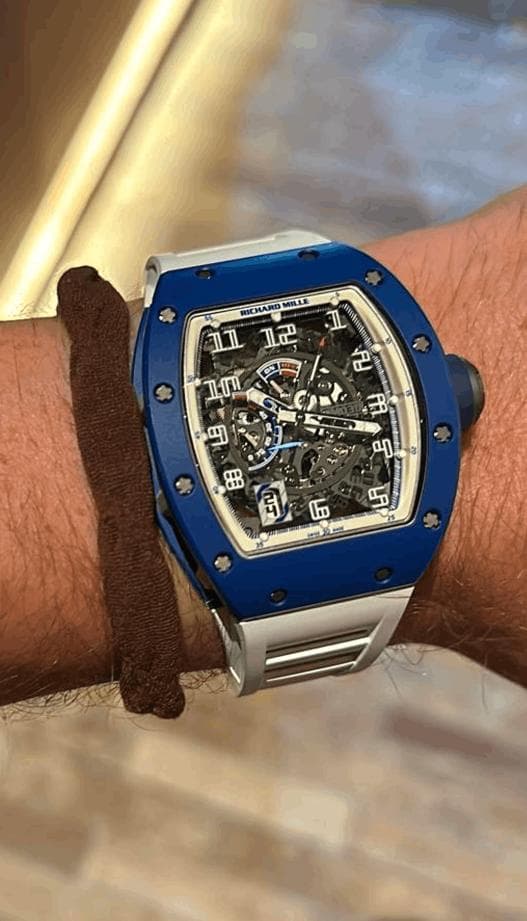
No single tool identifies every watch. A collector chasing a reference number uses printed catalogues, online databases, serial tables, a loupe and a caliper, caliber lookups, reverse image search and, increasingly, AI identifiers, each for a different kind of question. This guide describes what each tool does well, where it falls short and how to decide which one to pick up first.
Printed catalogues and brand archives
Brand catalogues, dealer price lists and the reference books written by collectors remain the most authoritative sources for what a model looked like when it left the factory. They show the original dial, hands, bracelet and box for a given reference and year, which is exactly what you need when checking whether a vintage watch is in its original configuration. Their weakness is access: the books are expensive, out of print or in another language, and brand catalogues from a given year can be hard to find.
Some manufacturers go further and open their archives. Patek Philippe issues an Extract from the Archives for a fee, confirming the date of manufacture and sale and the original specification of a watch from its movement and case numbers. Other brands offer similar services, sometimes free and sometimes only through their service departments. An extract is the closest thing to a definitive identification for a vintage piece, and it is worth the wait before a significant purchase. See the vintage watch collecting guide for how extracts fit into due diligence.
Reference databases and forums
Online reference databases collect model names, reference numbers, production years, case sizes, calibers and dial variants, usually with photographs. They are the first stop once you know the brand and have a candidate reference, because they tell you immediately whether the number exists and what it should look like. Quality varies. Community-maintained databases are broad but uneven; brand-specific sites run by collectors tend to be deep and accurate for one brand only.
Forums complement databases with human judgement. A clear photo and a polite question in the right sub-forum often produces a reference, a production estimate and a note on what to check, from people who have handled hundreds of examples. The trade-off is time, which is why forums suit vintage and unusual watches better than mainstream current references.
Serial-number dating tables
For several brands, collectors have compiled tables that map serial number ranges to approximate production years. Rolex serials can be dated this way up to 2010, when the brand switched to random serials. Omega serials, engraved on the movement on vintage pieces and on the case on modern ones, follow published ranges as well. Seiko encodes the date directly: the first digit of the serial is the last digit of the production year and the second digit is the month, so a caseback reading 7S26-0020 with a serial beginning 85 points to May of a year ending in 8, and the caliber's production span tells you which decade.
Two cautions. Serial tables are approximate, typically to within a year or two, because cases were made and stocked before being assembled and sold. And a serial proves nothing about authenticity, since counterfeiters copy real serial numbers. Use the tables to check that the serial, the reference and the dial style are consistent with one another, which is exactly how a mismatched vintage watch gets caught. For Rolex specifics, see how to identify a Rolex.
Loupe and caliper measurements
A 10x loupe and a digital caliper are the cheapest identification tools and among the most decisive. The loupe lets you read the shallow engravings between the lugs, inspect the printing on the dial and the finish of the coronet or logo, and spot service replacement parts by their slightly different lume or font. The caliper settles questions that photos cannot:
- Case diameter separates a 40 mm Submariner from a 41 mm one, or a 36 mm Datejust from a 41 mm one.
- Lug width, usually 18 to 22 mm, confirms whether a bracelet or strap is the right size for the case.
- Lug-to-lug and thickness distinguish generations that share a diameter, since case profiles change with new calibers.
Measure across the case excluding the crown, and measure twice. Published specifications sometimes round, so a watch that measures 40.3 mm may be listed as 40 mm.
Movement and caliber lookup
The movement is a fingerprint. When a display back or a watchmaker gives you access, the caliber number is engraved on a bridge or the rotor, and a caliber database tells you the manufacturer, the production period, the specifications and which watches used it. Common examples include the ETA 2824-2 and Sellita SW200-1 found across Swiss watches, the Seiko NH35 used by many microbrands, the Omega 3861 in the current Speedmaster Moonwatch 310.30.42.50.01.001, the Rolex 3235 in the Submariner Date 126610LN and the Spring Drive 9R65 in the Grand Seiko SBGA211. A movement that does not belong to the case is one of the clearest signs of a replica or a watch assembled from parts. For the basics of how these movements differ, see quartz vs automatic movements.
Reverse image search
A general reverse image search matches your photo against images on the web. It is free, instant and useful when you have no idea of the brand, since a famous design will surface pages about it within seconds. It rarely names a reference and it struggles with watches that share a design language, but as a way to turn an unknown watch into a brand and a family it earns its place.
AI identifiers
Dedicated identifiers are trained on labelled watch images and return a brand, a model and a shortlist of reference candidates from a single photo. WatchID, built by Horoview, is one example: the iPhone and Android app and the free web identifier return candidates with marketplace listings for each, so you can compare the shortlist against real examples, and brand pages such as Rolex and Seiko narrow the search from the start. These tools are at their best on mainstream modern references and weaker on vintage, modified or very obscure watches, and none of them authenticates a watch. The details of photographing for them and reading their output are in how to identify a watch from a photo, and the guide to the best app to identify a watch shows how to test one.
Which tool for which question
| Question | Best first tool | Confirm with |
|---|---|---|
| What brand and model is this watch in a photo? | AI identifier or reverse image search | Reference database |
| Which exact reference is it? | Engravings read with a loupe | AI identifier shortlist, reference database |
| When was it made? | Serial dating table | Brand archive extract |
| Is the dial, bezel or bracelet original? | Printed catalogue or brand-specific database | Forum opinion |
| Which movement is inside? | Caliber engraving and caliber database | Watchmaker inspection |
| Is this size right for the reference? | Caliper | Published specifications |
| Is it genuine? | None of the above alone | In-person inspection by a watchmaker or the brand |
The order matters less than the habit of cross-checking. A reference from an app, a serial that dates to the right year, a caliber that belongs in that case and a dial that matches the catalogue for that year together make a strong identification. Any one of them alone is a starting point. The step-by-step method that ties them together is in how to identify a watch, and the numbering systems behind the references are explained in watch reference numbers explained.